
History of human settlement in East Devon
East Devon and West Dorset have a 200 year history of tourism for some very good reasons. As well as the beautiful National Landscapes and the spectacular World Heritage Jurassic Coast, the towns and villages map thousands of years of evolving human habitation. If you have an interest in history, please read on for a general introduction, as well as pointers to some of historical highlights that can be seen on the J100 route, or visited if you have more time.
Prehistoric and Early Settlements
Archaeological finds, including stone tools and burial mounds, show that early hunter-gatherers and later farming communities have occupied the region over hundreds of thousands of years.
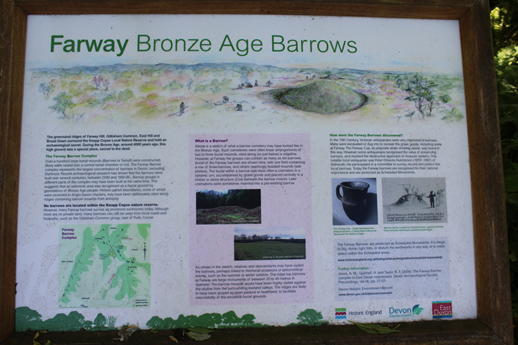
By the Bronze Age, settlements became more permanent. Burial mounds (barrows), examples of which will be passed en route between Sidbury and Farway (Leg L, photos including fantastic LIDAR images available here), suggest organised communities with established territories. These early inhabitants were attracted by fertile valleys and access to rivers such as the Exe, Otter, and Axe.
Roman and Iron Age Communities
Before and during Roman Britain, East Devon saw the development of fortified settlements and farmsteads. Hillforts such as the well-preserved Woodbury Castle (walked through on Leg J) acted as centres of trade, defence, and social organisation.
Although East Devon was not heavily urbanised by the Romans, older and recent archaeological investigations indicate the previous sites of Roman farms, villas (such as Honeyditches in Seaton), and small communities (such as the Roman town of Moridunum, just south of modern Axminster), linked by roads such as the Fosse Way (passing by Honiton and a branch via Axminster). Sadly, there are not many visitable Roman remains in the area.
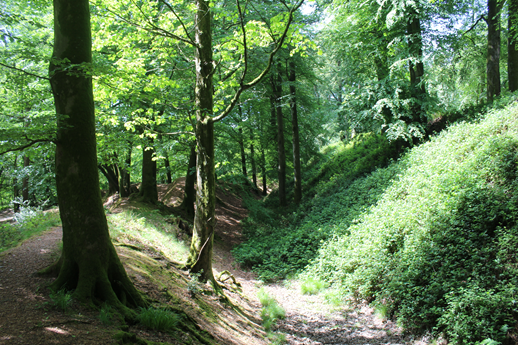
Photo: Earthworks at Woodbury Castle
Anglo-Saxon Foundations of Villages
After the Roman withdrawal in the 5th century, Anglo-Saxon settlers gradually established many of the villages that still exist today. These settlers typically chose fertile river valleys and cleared woodland to create farmland.
A clear example is East Budleigh (leg G), which likely began as a Saxon settlement in the 7th or 8th century. It probably started as a small enclosed farming community (“tun”), expanding over time as land was cleared and cultivated.
This pattern—small agricultural communities growing into stable villages—was repeated across East Devon, forming the backbone of its settlement network. We will visit several of these orginally Saxon settlements – Axminster is one, as well as Colyton, Woodbury and Uplyme.
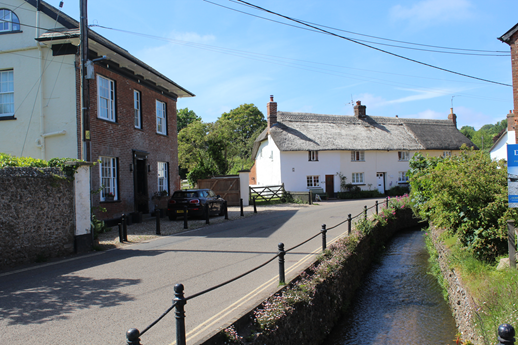
Photo: East Budleigh village
Medieval Market Towns and Coastal Settlements
During the medieval period, many settlements expanded into market towns, serving surrounding rural populations. Whilst Axminster is the best example we will visit (an important market and carpet-making centre), other examples are Honiton (known for lace-making and trade) and Ottery St Mary (a religious and agricultural hub).
These towns developed around trade routes and river crossings, becoming focal points for commerce and administration.
Coastal settlements such as Sidmouth, Seaton, and Beer grew through fishing, quarrying, and maritime trade. Beer (Leg D), for instance, became known for its limestone quarries, supplying stone for major buildings across England including Exeter Cathedral. These quarries can be visited on a tour and are absolutely fascinating, demonstrating multiple phases of quarrying with distinctive historical features. The harbour at Lyme Regis (CP2, with its famous Cobb, which has a starring role in Jane Austen’s novel Persuasion) dates from this period, as well as the ‘lost’ harbour at Axmouth.
Some inland villages, like Otterton (CP6), even functioned as small ports in the medieval period before river silting changed their fortunes. The Mill at Otterton (which can be freely visited and serves a wicked cream tea), with its historic millstones and working machinery, has been milling actively for over 1000 years, with the small port exporting flour downriver to avoid the potholed roads.
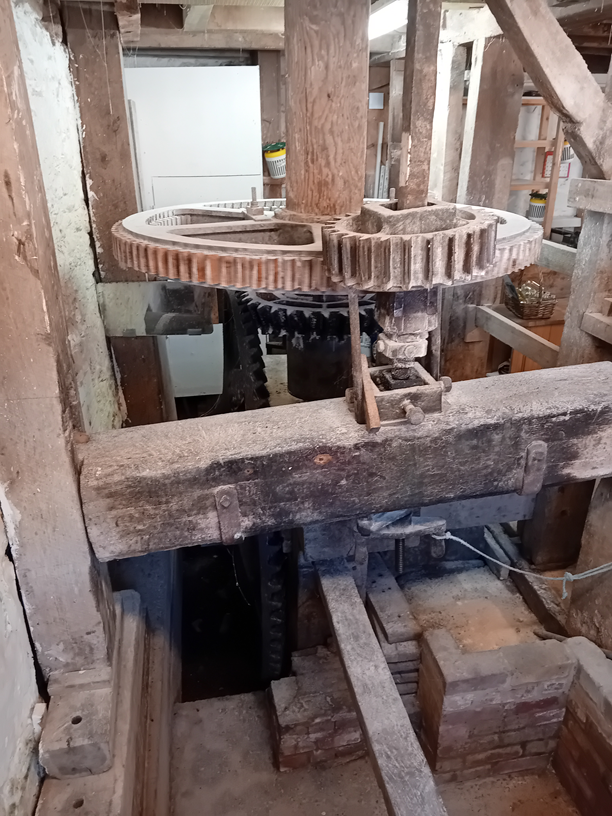
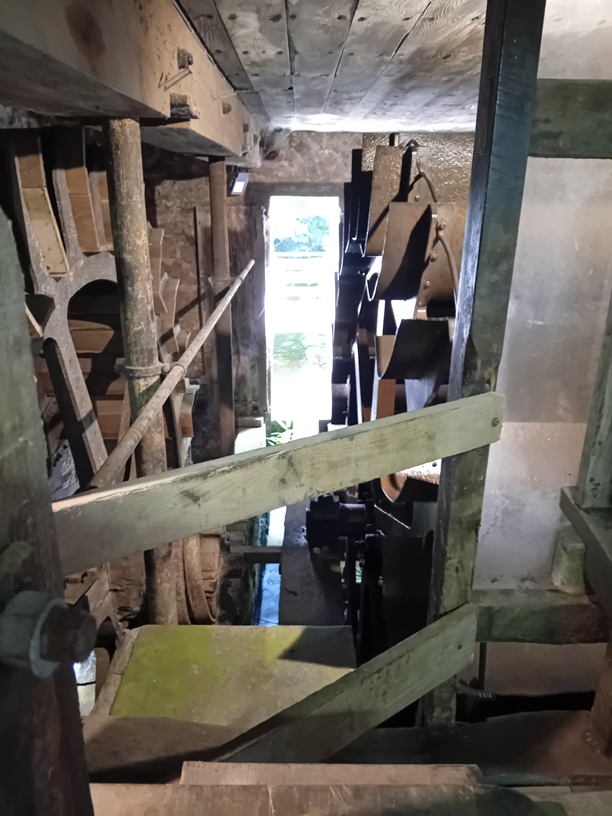
Photo: Working watermill machinery at Otterton - 1000 years of milling flour
Early Modern Changes and Settlement Shifts
General progress from the 16th to 18th centuries mirrored that elsewhere in rural England, with expansion of market towns, specialisation of agriculture (including cider orchards, such as those passed close to Netwon Poppleford, CP10), and coastal seafaring and smuggling (such as at Beer, Leg D).
Population growth and improved transport gradually strengthened connections between settlements, especially those near Exeter. Famous figures from East Devon from this time include Sir Walter Raleigh (explorer, c. 1552 – 1618) who was born in East Budleigh, and Samuel Taylor Coleridge (Romantic poet, 1772 – 1834) born in Ottery St Mary. And for the women, let’s honour Mary Anning (geologist, 1799 – 1847) who is Lyme Regis’ most famous figure. She made groundbreaking fossil discoveries along the Jurassic Coast, including the first correctly identified ichthyosaur skeleton; look out for the statue of her at as you climb out of Lyme Regis (on Leg C), though we won't pass the one pictured below.
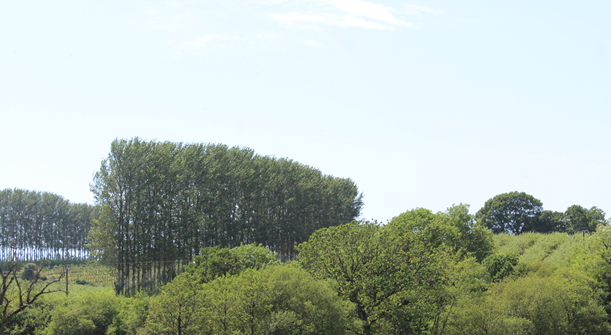
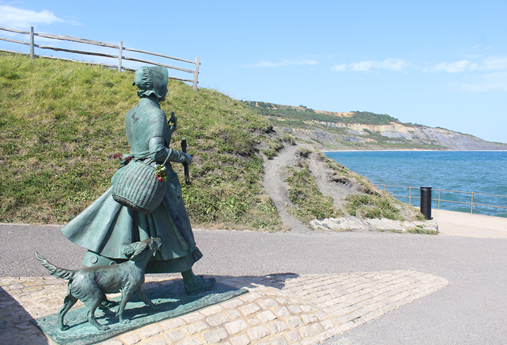
Photos: LEFT: apple orchards on the hillside; RIGHT: Mary Anning striding eastwards with her hammer;
Victorian Growth and Coastal Resorts
The 19th century brought significant transformation, particularly along the coast. Towns such as Sidmouth and Exmouth (CPs 6 and 9) developed into popular seaside resorts. Queen Victoria visited Sidmouth as a child in 1833 and the town gained a reputation as a genteel and refined resort. Agatha Christie (novelist, 1890-1076), though from Torquay, spent a lot of time in Sidmouth. Genteel, refined and…. murderous?!
Railways, most of which now are sadly decommissioned, and improved roads in the late 19th and early 20th century made these settlements accessible, shifting their role from fishing and trade to tourism and leisure. Look out for the Victorian Seaton tramway, for seaside visitors – we will pass by the terminus at Colyton (Leg M). Meanwhile, inland towns like Honiton retained their market functions but adapted to modern industry.
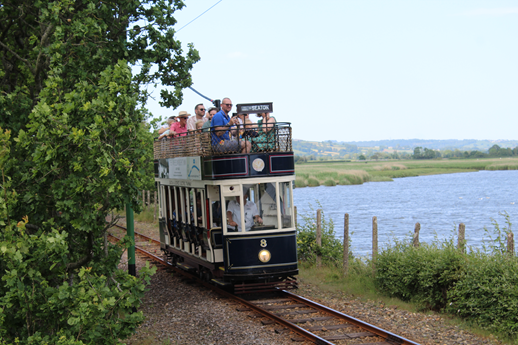
Photo: Tram on the Seaton tramway
Modern Settlement Patterns
What you see today as you visit and walk the route are the layers of history: hilltop forts now recolonised by nature; ancient villages retaining their Saxon layouts and agricultural roots; larger market towns continuing to function as service centres, and coastal towns thriving on tourism, especially along the Jurassic Coast. Given the exciting projects around wildlife and natural history, the area is fast becoming a magnet for nature tourism – you can read more about this here.
One more unusual modern settlement you might spot is the Marine Commando Training Camp, near Exton (passed on Leg I). It is not unusual, but can be sometimes a bit alarming, to come upon Marines training on Woodbury Common, armed and camouflaged in the gorse.
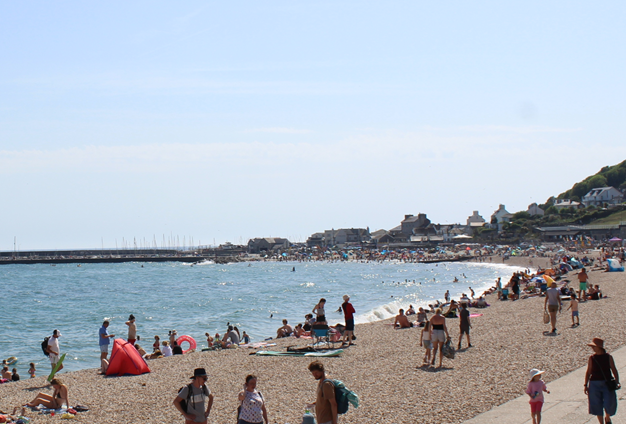
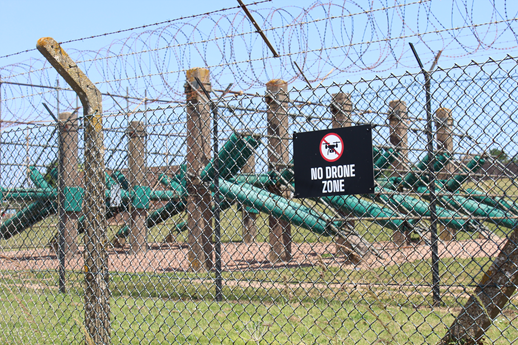
Photo: LEFT tourism at Lyme Regis beach on a warm May day; RIGHT Marine Commando Training Camp
Further information
If you want to explore the history of the area further, there are small museums in Axminster, Budleigh Salterton, Exmouth, Honiton, Lyme Regis, Ottery St. Mary and Sidmouth, mostly with opening hours during the summer. The Royal Albert Memorial Museum in Exeter holds lots of local human and natural finds.